Autism Mama Christian Butterfly Design
A Designer’s First Look: Gentle, Meaningful, and Made for Heartfelt Projects
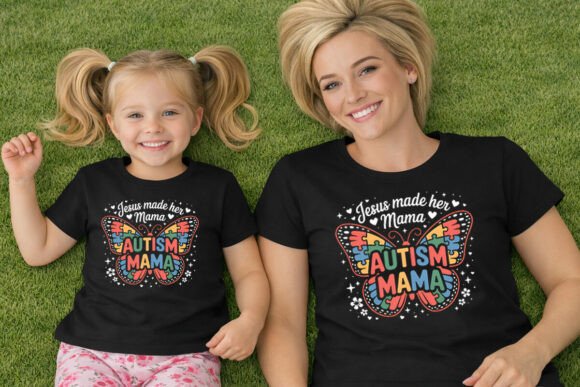
When I opened the Autism Mama Christian Butterfly Design, what struck me first wasn’t technical precision—it was intention. This isn’t a flashy, high-density motif built for showy apparel lines. It’s soft-edged, lightly detailed, and quietly reverent—balancing the symbolism of the butterfly (transformation, hope, neurodiversity) with subtle Christian motifs like a cross-shaped wing accent or gentle script that reads “He holds me.” The layout breathes: wings open but not sprawling, body centered, text legible without crowding. It feels made for real people—not stock graphics—but for moms stitching comfort onto baby blankets, small shop owners embroidering keepsake totes for autism awareness events, or Etsy sellers curating faith-and-family collections.
Where It Shines: Real Projects That Feel Personal
I tested the Autism Mama Christian Butterfly Design on a natural cotton canvas tote—intended for a local mom-run boutique selling sensory-friendly gifts. Stitched at ~4.5" wide with 40-weight poly thread and medium tear-away stabilizer, it landed beautifully: clean satin-stitched wings, smooth fill-stitch body, and crisp running-stitch outlines holding shape without stiffness. Customers responded immediately—not just to the message, but to how *handmade* it felt. No pixelation, no jagged edges, no thread nests in corners. That matters when your finished product is a $38 personalized gift sold alongside hand-poured candles and custom storybooks.
It also translated well onto a lightweight organic cotton onesie (using cut-away + topping), a linen tea towel (with reduced stitch density to avoid puckering), and as an embroidered patch sewn onto a denim apron. In each case, the design retained its warmth and clarity—never clinical, never cluttered. For small business owners building cohesive branding, this design fits naturally into collections centered on empathy, motherhood, faith, and inclusion—without needing heavy reworking.
Where to Pause—and Why
This isn’t a one-size-fits-all embroidery file. Its thoughtful simplicity becomes a limitation in certain contexts:
- Small hoop sizes: At under 3", fine details—like the delicate cross motif or thin wing veins—start to blur. If you’re stitching on a child’s cap or wristband, test first and consider simplifying manually.
- Textured or stretchy fabrics: On fleece or jersey, the lighter stitch density helps avoid distortion—but only with proper stabilizer. Skip the lightweight tear-away here; go for cut-away + topping, especially around the script text.
- Dark or heavily printed backgrounds: The design relies on contrast. On charcoal sweatshirts or black towels, test thread colors carefully—cream or heather gray often reads warmer and more personal than stark white.
- Frequent-wash items: While well-digitized, the satin-stitched wings benefit from secure underlay. Reinforce backstitching at wingtips if using on baby bibs or kitchen linens.
What It Adds—Beyond Thread and Fabric
The Autism Mama Christian Butterfly Design elevates perceived value because it *means* something—not just aesthetically, but emotionally. When stitched onto a nursery pillow cover or baptismal blanket, it signals care in both execution and intent. Buyers notice that. Etsy sellers report higher engagement on listings where this design anchors a cohesive theme (“Faith-Filled Autism Gifts”) versus standalone digital downloads. It builds trust: customers see craftsmanship *and* compassion in one motif.
For craft businesses, it supports brand consistency without demanding uniformity—you can pair it with neutral florals, simple crosses, or even monogrammed initials and still hold the same emotional tone. And because it avoids trendy fonts or overused clipart tropes, it stays relevant across seasons and holidays—from Easter gifting to World Autism Awareness Day to everyday encouragement.
Practical Notes Every Embroiderer Should Run Through
Before stitching your first Autism Mama Christian Butterfly Design project—or listing it in your shop—here’s what I do, every time:
- Test on scrap fabric—same type, same stabilizer, same thread. Watch how the wings lay flat and whether the script remains legible after washing simulation.
- Check thread color contrast on both light and dark mockups. Print them. Hold them at arm’s length. Does the message read clearly? Or does it fade into background noise?
- Review stitch density. If you plan to layer it (e.g., on a quilt block or multi-design sweatshirt), confirm it won’t overwhelm adjacent elements.
- Confirm hoop size compatibility. Know your machine’s max width—and whether the design fits comfortably within it, including jump stitches and trim commands.
- Inspect small details manually in your embroidery software: are wingtips sharp? Is the cross motif fully formed? Are there stray running stitches?
- Test black-and-white printable mockups—especially if you sell digital files. Clients need to visualize placement and scale before purchasing.
- Verify licensing. Since this is listed as a Freebies offering, double-check usage rights before selling finished embroidered goods commercially—or reselling the digital embroidery file itself.
Final Thought: A Quiet Design With Resonant Purpose
The Autism Mama Christian Butterfly Design won’t dominate a trade show booth. It won’t trend on TikTok with flashy transitions. But it will sit perfectly on a mama’s tote bag as she walks her child into therapy—soft, steady, full of quiet strength. It will anchor a handmade baby blanket gifted to a family navigating early diagnosis. It will appear thoughtfully on a church nursery wall, stitched by volunteers who understand that every loop of thread carries meaning.
That’s the mark of a truly useful embroidery file: not complexity, but resonance. Not volume, but voice. If you’re creating for heart-led markets—faith communities, special needs families, mindful makers—this design earns its place in your library. Just remember: treat it like the meaningful artifact it is. Test it. Respect its limits. Let it speak softly—and watch how loudly it’s heard.